Tafida’s story – Part 1
Tafida Raqeeb is a previously healthy 5-year-old child who suffered from a traumatic brain injury. She had a ruptured arteriovenous malformation (AVM) in her brain and suffered a respiratory and a cardiac arrest at home. AVM is a tangle of blood vessels with abnormal connections between arteries and veins.
On 9th February around 5:15am, Tafida woke up complaining of her head hurting. Within 5 minutes, she was unconscious and had stopped breathing; her 14 year old brother started CPR while they waited for the paramedics to arrive. By the time the paramedics had arrived, Tafida suffered a cardiac arrest and had to be intubated at home. She was taken to the local hospital where following investigations, the family were told that a vessel had burst in her brain and that she had to be transferred to Great Ormond Street Hospital (GOSH) for surgery to stop the bleed. The family were not allowed to see her due to her critical condition. Her parents were not allowed to travel with her (not even one parent!).
When the family arrived at GOSH, the receptionist was not able to tell them where Tafida was. It was only when the mother received a call from an unknown person that they found out the whereabouts of their daughter. She had been transferred to King’s College Hospital (KCH) on route (reason was not made known to family). When the family finally made their way to KCH, they were informed by the medical team that they could not see Tafida as they were getting her ready for surgery.
Just before the operation, Dr Bassel Zebian (Paediatric neurosurgeon) spoke to the parents, explaining that Tafida had suffered from an AVM rupture which rarely happens to children. The parents gave their consent for the surgery having been informed that there was only a 1% chance of survival (she would have died without it so there really wasn’t a choice here).
About 7 hours after Tafida had gone in for surgery, we were informed that the surgery was completed and she was in recovery. Dr Zebian met the family and informed them that the surgery had gone well; however, the next 48 hours to one week is critical for her. Tafida was admitted to Thomas Cook Intensive Care post operation. On the next day (Sunday 10th February), Tafida went into cardiac arrest four times and had to have CPR to be revived.
After a rocky weekend, the next day Tafida’s stats were beginning to stabilise. For the first time since Tafida’s collapse, the family were beginning to have hope. However, later that day, the family were informed that the doctors believed that Tafida was brain dead and will be performing the brain stem test. They wanted to withdraw intensive care support and have this legalised by completing the brain stem test. Despite objections and legal intervention, they proceeded with the brain stem test on Thursday 14th February.
Events leading up to the brain stem test were distressing for the family, particularly as one doctor – Dr Tushar Vince (Intensive Care Consultant) – had said to the parents that she can “guarantee” that Tafida was “dead”. Parents were asked to make the funeral arrangements – even though Tafida hadn’t yet had the brain stem test or been pronounced dead.
Tafida’s story – Part 2
Following the brain stem testing, parents were informed that Tafida made gasping movements on the apnea testing. This was an indication that she wasn’t brain dead and therefore they cannot remove her from the ventilator. From then on, Tafida remained on the ventilator in a semi-conscious coma. At the time, the family did not know that Tafida was in a coma until they sought advice from independent neurosurgeons on her condition; one of whom then confirmed that she was in a coma. None of the consultants at KCH had mentioned this. How was a child who was in a coma expected to perform during a brain stem test?
It was only after a few weeks, when a senior KCH neurologist (Dr Ramesh Venkateswaran) assessed Tafida and informed the family that she was emerging from a deep coma. This was the first time the family had heard it from any doctor at Kings. Dr Ramesh informed the parents that Tafida needs to be given time to recover and that it might even take up to one year. He gave hope to the family by clearly stating that he thought she was making progress. However, he later changed his mind and said that he had revisited his literature which says recovery will be within 3 months if there was going to be recovery at all. How can a senior neurologist of more than 20 years not know such significant information?
Following the brain stem test, the medical team met with the family many times in the first month and repeatedly suggested end of life as they believed that Tafida will not recover. It was only when they saw that the family were firm in their decision to not turn off the ventilator, that they had backed off a little. Over the next two months, Tafida started to make little progress, such as opening of eyes and movement of limbs. Her stats had also been stable for a long period of time. In April, she was transferred to Royal London Hospital (RLH) with confirmation that she will have a tracheostomy, which meant that she can come off the ventilator. The family were even told that she may be able to go home after a few months and her recovery could continue at home.
Unfortunately, this was not the case. At the first meeting after the transfer, Dr Mamta Vaidya (Paediatric Intensive Care consultant and Clinical Director in Paediatrics at the Royal London Hospital, Barts Health) informed the family that they will complete their own assessment of Tafida and then put her case forward to an ethical team who will decide whether to provide the tracheostomy or not. During their assessment, an MRI scan picked up fluid (hydrocephalus) in her brain, for which she was transferred back to King’s Hospital to have surgery to insert a rickman reservoir which would help drain the fluid. Following the surgery, she was transferred back to Royal London Hospital.
At the end of April, a team of consultants met to assess Tafida and discuss her next steps. It was unanimously agreed to attempt to extubate her at least 4 or 5 times and to give her time to recover. They only managed to extubate her twice as she kept falling very unwell. The second time they extubated her was following a chest infection, in which case she was already very sick and not likely to manage without the ventilator.
Tafida’s story – Part 3
In the weeks following this, Tafida was beginning to get more sick than usual. New scans showed that fluid had once again built up in her brain, meaning the reservoir surgery was not successful. She then underwent another surgery, this time having a VP shunt inserted. This is where a device is implanted into the brain to allow the excess fluid to flow through into another part of the body.
Two weeks ago, on Wednesday 19th June 2019, the parents were informed by the nursing staff that Dr Zebian and Dr Ramesh were coming to the hospital to meet them in half an hour. No other notice was given to them. At the meeting, Dr Zebian informed them that they had decided to withdraw treatment and if parents do not agree, the case will be taken to court to obtain an order to terminate her life.
On Monday 24th June, Dr Vaidya suddenly requested to meet the parents. At the meeting, she reinforced King’s decision about withdrawing the ventilator and discussed where the family would like to end her life (home, hospice or hospital). A few days later, Dr Vaidya met the family once again and informed them of the date they had decided to switch the ventilator off. The parents requested for an additional week to enable her family to spend time with her, in particular her brother who was taking exams that week. Dr Vaidya replied that she was a doctor and not a “mummy” and sarcastically suggested that he could sit his exams at the hospital.
In the meantime, the family have been researching various foreign treatments and have decided that they would like to take Tafida to Italy to continue the treatment. A renowned hospital in Italy has accepted Tafida and has liaised with Dr Vaidya and Dr Simona Lampariello (Lead paediatric consultant at RLH) to arrange her transfer. However, they both have refused to release Tafida and are continuing to pursue end of life.
Tafida’s life saving surgery had been delayed for almost five hours as there was uncertainty of where to take her, for which there is an internal investigation going on. Throughout the past 5 months, the parents have been repeatedly told that Tafida was dying; however she continued to fight for her life. She survived the initial critical period which they said she wouldn’t; she then survived 3 surgeries and continues to fight. It is only fair that she is given a chance to make a recovery and be allowed to be transferred to a hospital and medical team who are willing to continue with her treatment.
https://www.facebook.com/carerswantcompetence/posts/369288577088500?__tn__=K-R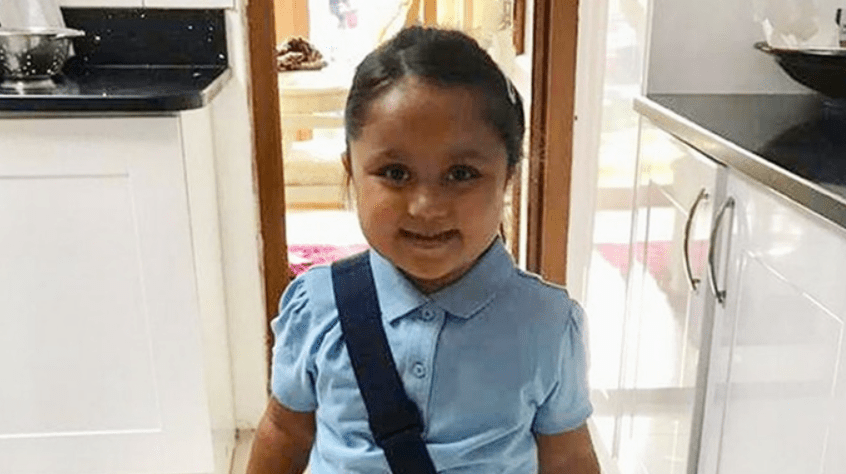
SUPPORT TAFIDA RAQEEB

Published
 Carers Want Competence